
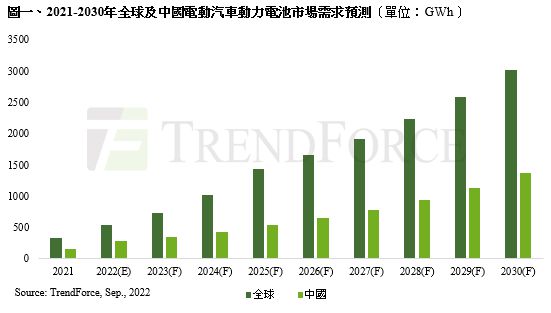
Research firm TrendForce recently published a forecast of the power battery market, showing that the power battery market demand will continue to grow at a rapid pace, by 2024, the global installed power battery scale will exceed 1TWh (1000 GWh), by 2030 will exceed 3TWh, of which, China's market size will occupy a global share of about 45%.
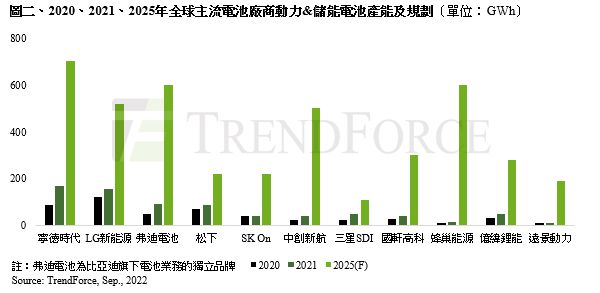
From the supply side, Ningde Time, LG New Energy, BYD, Sinova, Samsung SDI, Panasonic and other major global power battery manufacturers are accelerating their production expansion, with a total of about 4.2 TWh of power & energy storage battery capacity planned by 2025, of which Chinese manufacturers account for about 3.1 TWh, leading the world in capacity expansion rhythm.
TrendForce also pointed out that the boom in power & storage batteries, so that the upstream lithium, cobalt, nickel and other mineral resources supply bottlenecks are increasingly prominent, lithium carbonate and other lithium-ion battery raw materials prices also continue to be high, the power battery production cost pressure is expected to continue until 2024, but the agency also pointed out that the high price of lithium materials will accelerate the application of sodium-ion battery technology, the vertical integration of downstream enterprises layout, will also inject more resources into the development of lithium, cobalt and nickel resources, helping to accelerate the relief of supply tension.
Source:aijiwei APP


Stay up to date with the latest in industry offers by subscribing us. Our newsletter is your key to receiving expert tips.
The artificial intelligence(AI) boom is triggering an unprecedented expansion race among the world's largest memory chipmakers.Surging demand for high-bandwidth memory (HBM) and high-performance D
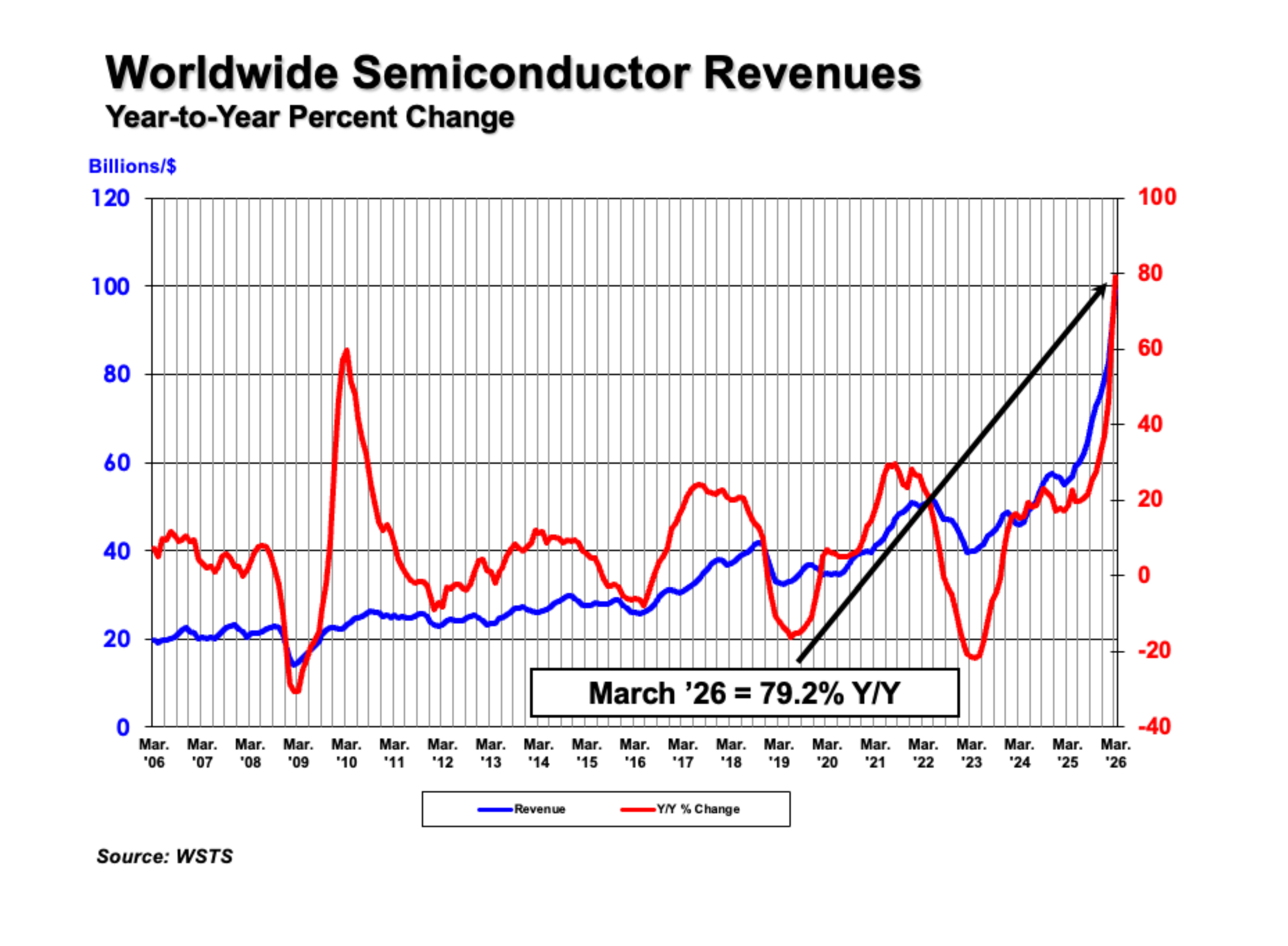
The Semiconductor Industry Association (SIA) today announced global semiconductor sales were $298.5 billion during the first quarter of 2026, an increase of 25% compared to Q4 of 2025. Global sales we
Texas Instruments (TI) reported robust results for the first quarter of 2026 on April 23, driven by surging AI data center demand and a notable rebound in industrial control applications. TI stressed


