
According to Taiwan Economic Daily, TSMC will catch up withe Intel for the first time this quarter to become the second-largest chipmaker behind Samsung, and will further widen the gap in Q3, as the peak season.
TSMC’s performance has grown steadily in recent years, while Intel’s is relatively unstable. TSMC’s revenue in Q2 will reach a new high for the 7th season if it successfully reach the financial target. In the contrary, the quarterly revenue of Intel declined for two consecutive quarters in the first half of this year after hitting a record high of $20.5 billion in Q4 2021. Based on the projected revenues announced by TSMC for April and May, there is no concern about reaching the target revenues of $17,6 billion to $18.2 billion. Intel expects revenue target of $18 billion for this quarter.
Some analyst said TSMC’s revenue for the quarter is expected to overtake Intel mainly because it diversely applies its customer base, and its customers are mostly from the North American market. TSMC concentrates its production capacity in Taiwan, China, while Intel encounters the tests from the lockdown in China’s mainland, supply chain dispatch, concentrated end-use applications in a single personal computer (PC), and servers.
Source from ITHome


Stay up to date with the latest in industry offers by subscribing us. Our newsletter is your key to receiving expert tips.
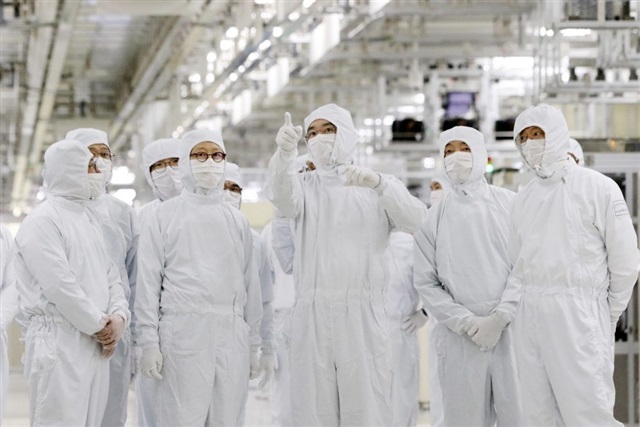
The artificial intelligence(AI) boom is triggering an unprecedented expansion race among the world's largest memory chipmakers.Surging demand for high-bandwidth memory (HBM) and high-performance D
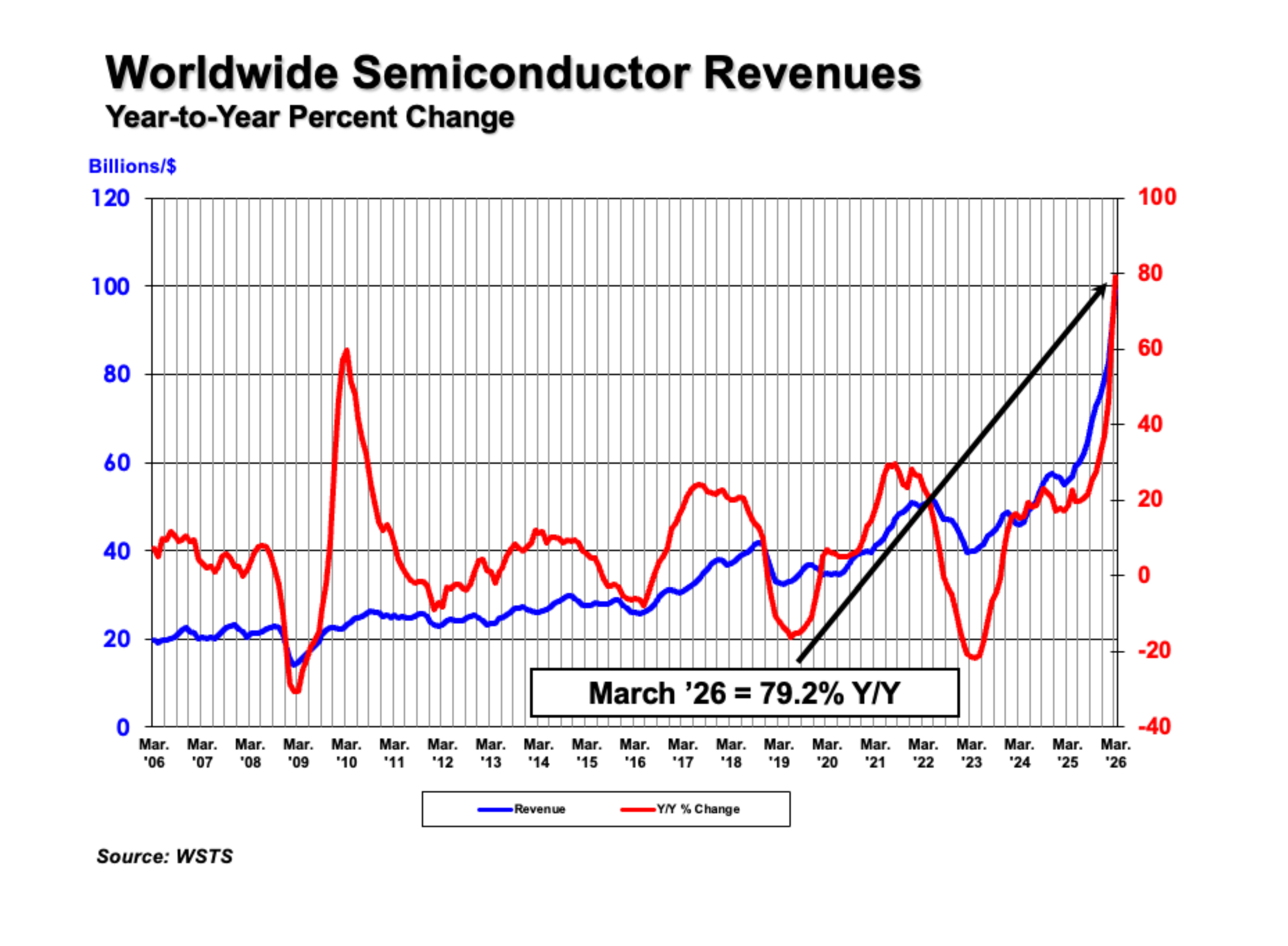
The Semiconductor Industry Association (SIA) today announced global semiconductor sales were $298.5 billion during the first quarter of 2026, an increase of 25% compared to Q4 of 2025. Global sales we
Texas Instruments (TI) reported robust results for the first quarter of 2026 on April 23, driven by surging AI data center demand and a notable rebound in industrial control applications. TI stressed


