
The recovery of the overall semiconductor market, as well as the increasing demand for advanced materials for high-performance compute and high-bandwidth memory manufacturing, supported 2024 materials revenue growth.
Wafer fabrication materials revenue increased 3.3% to USD 42.9 billion in 2024, while packaging materials revenue grew 4.7% to USD 24.6 billion last year.
The chemical mechanical planarisation (CMP), photoresist, and photoresist ancillaries segments experienced strong double-digit growth driven by increased complexity and the number of processing steps required for advanced DRAM, 3D NAND flash and leading-edge logic integrated circuits (ICs). All semiconductor materials segments, except for silicon and silicon-on-insulator (SOI), registered year-on-year increases. The demand for silicon, particularly in the trailing edge segment, remained weak in 2024 as the industry continued to work through excess inventory, resulting in a 7.1% decline in silicon revenue in 2024.
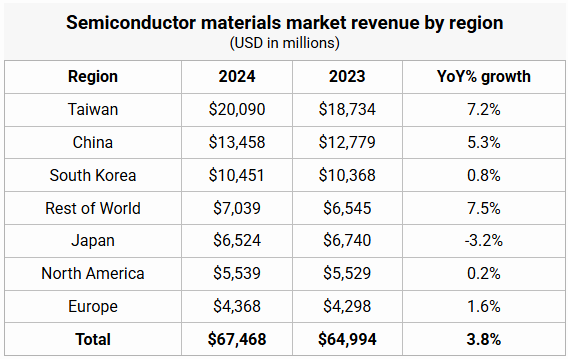
Taiwan, with USD 20.1 billion in revenue, was the world's largest consumer of semiconductor materials for the 15th consecutive year. China, at USD 13.5 billion in revenue, continued to register year-over-year growth, ranking second in 2024, while Korea followed as the third-largest consumer with USD 10.5 billion in revenue. All regions, except for Japan, posted single-digit increases in 2024.


Stay up to date with the latest in industry offers by subscribing us. Our newsletter is your key to receiving expert tips.
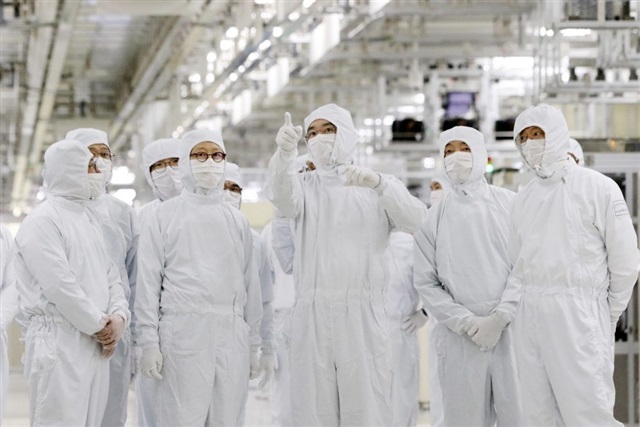
The artificial intelligence(AI) boom is triggering an unprecedented expansion race among the world's largest memory chipmakers.Surging demand for high-bandwidth memory (HBM) and high-performance D
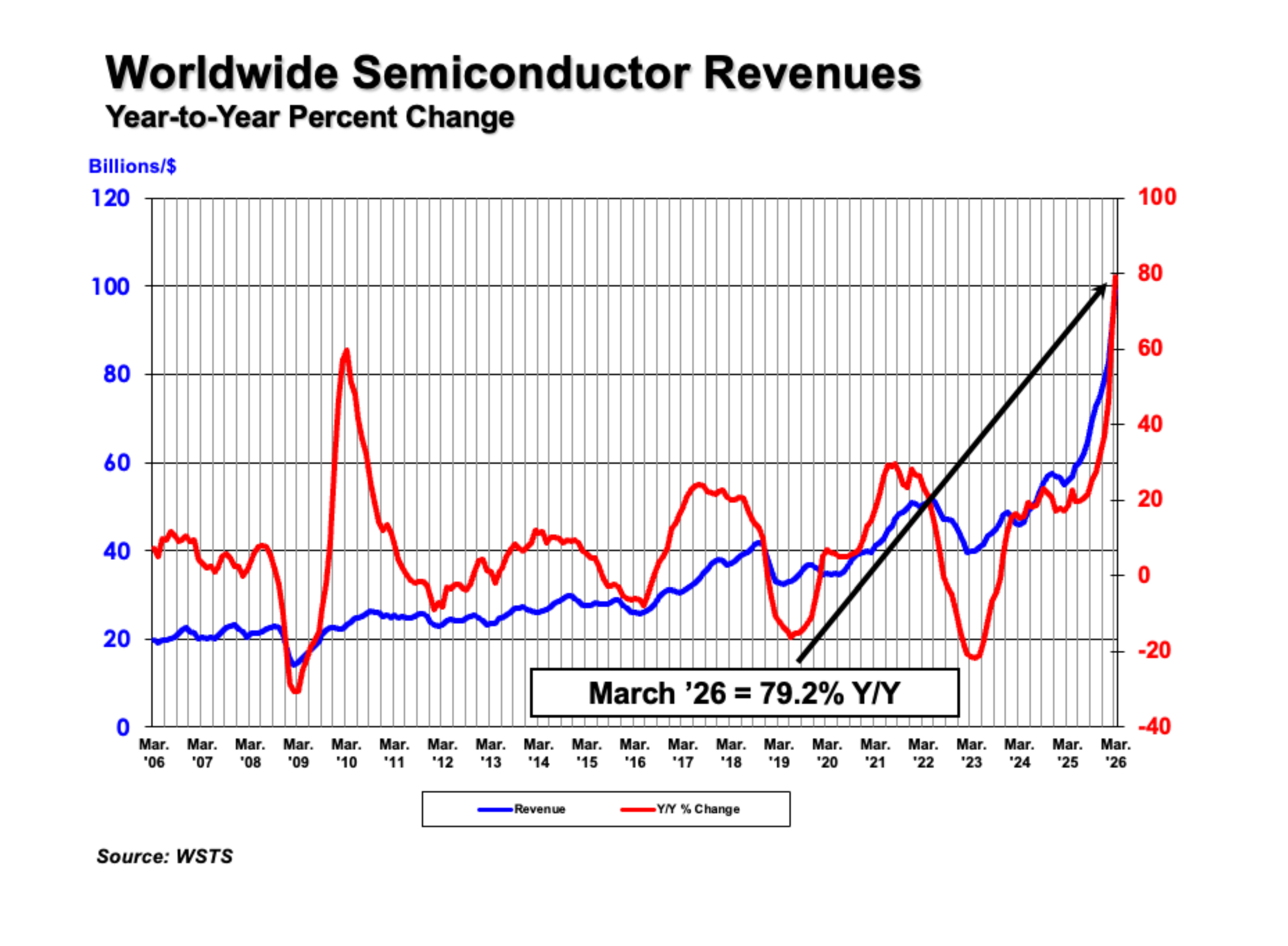
The Semiconductor Industry Association (SIA) today announced global semiconductor sales were $298.5 billion during the first quarter of 2026, an increase of 25% compared to Q4 of 2025. Global sales we

Texas Instruments (TI) reported robust results for the first quarter of 2026 on April 23, driven by surging AI data center demand and a notable rebound in industrial control applications. TI stressed


