
MediaTek announced on September 16, 2025, that it has completed the tape-out of its first flagship system-on-chip (SoC) using TSMC's 2nm process, becoming one of the earliest adopters of the advanced node. Mass production is expected by late 2026. The companies have a long history of collaboration across smartphones, automotive, computing, and data center chips, with MediaTek calling the achievement a major milestone in its strategic partnership with TSMC.
TSMC's nanosheet breakthrough
The 2nm process marks TSMC's first use of nanosheet transistor architecture, designed to deliver higher performance, improved power efficiency, and stronger yields. MediaTek's debut 2nm SoC will adopt the new technology and is set for commercial rollout in late 2026.
Compared with TSMC's N3E node, the enhanced 2nm platform increases logic density by 1.2 times, boosts performance by up to 18% at the same power, and cuts power consumption by approximately 36% at equivalent speeds.
Industry momentum builds
MediaTek president Joe Chen said the development highlights the company's leadership in applying advanced semiconductor technologies across diverse markets. He added that MediaTek's longstanding partnership with TSMC ensures its flagship products combine optimal performance with energy efficiency, enabling solutions that span from edge devices to cloud infrastructure.
Analysts expect uptake of TSMC's 2nm process to accelerate more quickly than the transition to 3nm, supported by strong yields and improved cost efficiency. Industry observers forecast that three leading smartphone SoC vendors will launch 2nm products in 2026, underscoring the readiness of the technology for mass adoption.
The shift to 2nm technology is expected to help device makers meet surging demand for AI-driven features while maintaining the balance between performance and power efficiency.


Stay up to date with the latest in industry offers by subscribing us. Our newsletter is your key to receiving expert tips.

Following a record-setting year for the semiconductor industry, the start of the new year has continued the momentum, as semiconductor revenue grew 27% in 1Q26 from 4Q25 to reach US$319bn, according t
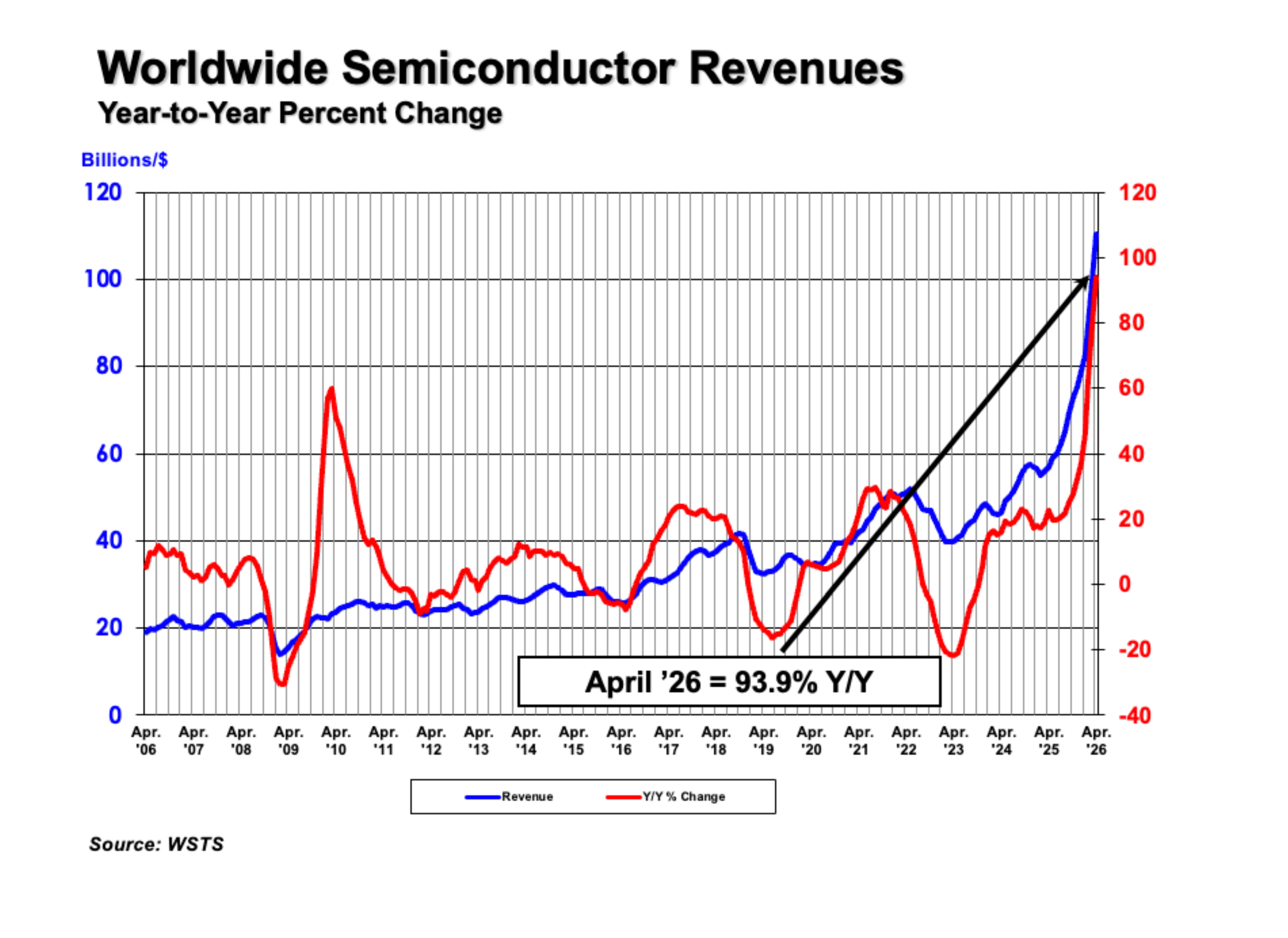
The Semiconductor Industry Association (SIA) today announced global semiconductor sales were $110.5 billion during the month of April 2026, an increase of 11% compared to the March 2026 total of $99.5
UMC held its shareholders' meeting on May 27, with CEO Jason Wang saying that as AI applications expand rapidly, long-term semiconductor demand still has room for growth. In addition to deepening


